European Dietary Supplements Market: Key Trends, Growth Factors, and Long-Term Prospects
The dietary supplements industry in Europe is showing consistent expansion, supported by growing health consciousness, demographic shifts, and an increasing focus on preventive health solutions. Across the region, consumers are integrating supplements into their everyday lifestyles to enhance immune defense, digestive function, cardiovascular health, and overall well-being. As nutritional deficiencies and lifestyle-related health concerns become more common, dietary supplements are increasingly viewed as a core element of modern nutrition strategies.
Market Snapshot
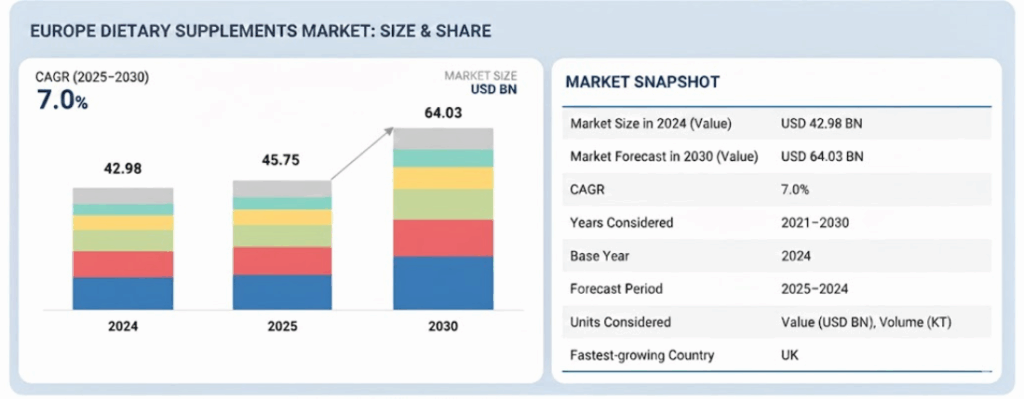
The European dietary supplements market is forecasted to grow from USD 45.75 billion in 2025 to approximately USD 64.03 billion by 2030, reflecting a compound annual growth rate (CAGR) of 7.0% over the forecast period. This growth is primarily fueled by a rising preference for preventive and holistic health approaches, strong demand for plant-based, organic, and natural products, and the continued expansion of pharmacies and drugstore chains as key retail channels.
Major markets such as Germany, the United Kingdom, France, Italy, and Spain account for a significant share of regional consumption, supported by mature pharmaceutical and nutraceutical ecosystems. At the same time, Eastern European countries are emerging as promising growth markets, driven by increasing urbanization, higher disposable incomes, and ongoing improvements in healthcare infrastructure.
Key Growth Drivers in the European Market
Increasing Focus on Health and Wellness
European consumers are shifting their mindset from reactive treatment to proactive health maintenance. Rising awareness around immune support, mental performance, and sustained energy levels has accelerated demand for everyday supplements, particularly vitamin C, vitamin D, B-complex vitamins, and zinc.
Expanding Aging Population
Europe has one of the oldest populations worldwide, which has significantly increased demand for supplements targeting bone strength, joint health, cardiovascular support, and cognitive function. Ingredients such as calcium, magnesium, omega-3 fatty acids, and collagen are especially popular among older consumers.
Preventive Healthcare and Changing Lifestyles
The growing emphasis on preventive care, combined with fast-paced lifestyles and dietary imbalances, is encouraging consumers to use supplements to bridge nutritional gaps. Urban living and evolving eating habits have further strengthened the demand for convenient and reliable nutritional solutions.
Rising Popularity of Sports and Active Nutrition
Greater participation in fitness activities and recreational sports has driven strong growth in sports nutrition products. Protein supplements, amino acids, and performance-focused formulations are increasingly popular, particularly among younger consumers and millennials throughout Europe.
Product Trends Shaping the Market
Clean-Label and Naturally Sourced Products
Consumers are increasingly seeking supplements made with clean, transparent formulations that emphasize natural, organic, and plant-derived ingredients. Minimal processing, non-GMO claims, and clear ingredient sourcing have become critical purchasing factors.
Growth of Personalized Nutrition
Advancements in digital health technologies and diagnostic tools have accelerated interest in personalized supplement solutions. Tailored vitamin packs and health-condition-specific formulations are gaining traction, often delivered through online platforms and subscription-based services.
Strong Demand for Probiotics and Gut Health Solutions
Probiotics continue to be among the fastest-growing product categories, driven by rising awareness of the connection between gut health, immunity, and mental well-being. Multi-functional products combining probiotics, prebiotics, and digestive enzymes are particularly appealing to consumers.
Innovation in Supplement Formats
Manufacturers are moving beyond traditional tablets and capsules by introducing gummies, powders, effervescent tablets, and liquid formulations. These alternative formats improve convenience, taste, and user compliance, broadening appeal across age groups.
Market Segmentation Highlights
By Product Category
- Vitamins and minerals remain dominant due to routine nutritional needs
- Herbal and botanical supplements are growing in popularity amid natural health trends
- Proteins and amino acids are widely used in sports and active nutrition
- Probiotics and digestive health products are gaining widespread adoption
By Dosage Form
- Tablets and capsules lead the market due to ease of use and accurate dosing
- Powders and liquid supplements are favored in sports and clinical nutrition
- Gummies and chewable formats are experiencing rapid growth among children and younger adults
By Distribution Channel
- Pharmacies and drugstores continue to be trusted retail outlets
- Supermarkets and hypermarkets offer strong product visibility
- Online retail is the fastest-growing sales channel across Europe
United Kingdom: A High-Growth Market
The United Kingdom is expected to record the fastest growth rate in the European dietary supplements market during the forecast period. This expansion is supported by a strong shift toward proactive health management, with widespread daily consumption of vitamins, minerals, immune-support products, and lifestyle-focused supplements.
Leading Companies in the European Dietary Supplements Industry
- Nestlé (Switzerland)
- Abbott (United States)
- Haleon Group of Companies (United Kingdom)
- Otsuka Holdings Co., Ltd. (Japan)
- Glanbia plc (Ireland)
- Bayer AG (Germany)
- Perrigo Company plc (Ireland)
- Amway Corporation (United States)
- Arkopharma (France)
- BioGaia (Sweden)
Future Market Outlook
The European dietary supplements market is expected to maintain its strong growth momentum, supported by increasingly health-aware consumers, innovation in product development, and evolving nutritional demands. Companies that prioritize scientific credibility, clean-label formulations, personalized solutions, and digital engagement strategies are well positioned to strengthen their competitive advantage.
As wellness continues to evolve into a long-term lifestyle commitment rather than a short-term trend, dietary supplements are set to remain a vital component of Europe’s broader health and wellness landscape.